
Introduction
Yarn manufacture turns raw fibres into usable threads that are used in textiles all over the world. This step-by-step guide delves into the yarn manufacturing process, highlighting critical phases for clarity and precision.
Yarn Manufacturing Process
Step 1: Fiber Selection and Ginning
Raw materials such as cotton bales arrive contaminated with seeds, dirt, and other impurities. Ginning creates clean fibre bales ready for processing by separating lint from seeds using devices such as saw gins. Moisture content is measured and controlled through drying to prevent damage during transport.
Step 2: Blow Room (Opening and Cleaning)
In the blow room, bale openers open compacted fibers into tufts. Air currents and beaters remove dust, garbage, and short fibres while blending multiple kinds to ensure similarity. This yarn production stage assures consistency in quality before further refinement.
Step 3: Carding
Carding uses cylinder wires to align disorganised fibres into a continuous web. As residual contaminants are removed, fibers parallelise into a sliver, a loose, rope-like strand. Carding, also referred to as the “heart of spinning,” removes neps and produces a cohesive fibre mass.
Step 4: Combing (Optional for Finer Yarns)
Combing is the process of removing short fibres and aligning longer staples after carding in quality yarns. Noils (trash) are eliminated, resulting in smoother, stronger slivers suitable for high-count yarns in clothing.
Also Read: https://tirumalaitextiles.com/yarn-count-complete-guide/
Step 5: Drawing
Multiple slivers feed into draw frames, where rollers draft and stretch them to improve evenness and parallelism. Doubling (combining slivers) minimises imperfections and increases tensile strength for subsequent yarn processing.
Step 6: Simplex or Roving Frame
Slivers are drafted and slightly twisted to create light, twisted roving. Bobbins gather attenuated strands and increase cohesiveness without significantly strengthening the yarn, preparing it for ultimate spinning.
Step 7: Ring Spinning
For draughting, twisting, and winding onto spindles, roving feeds are fed into ring frames. Travellers add a genuine twist, creating yarn with the appropriate strength and count. This core yarn production stage results in ring-spun yarn, which is valued for its smoothness and durability.
Step 8: Winding and Cone Preparation
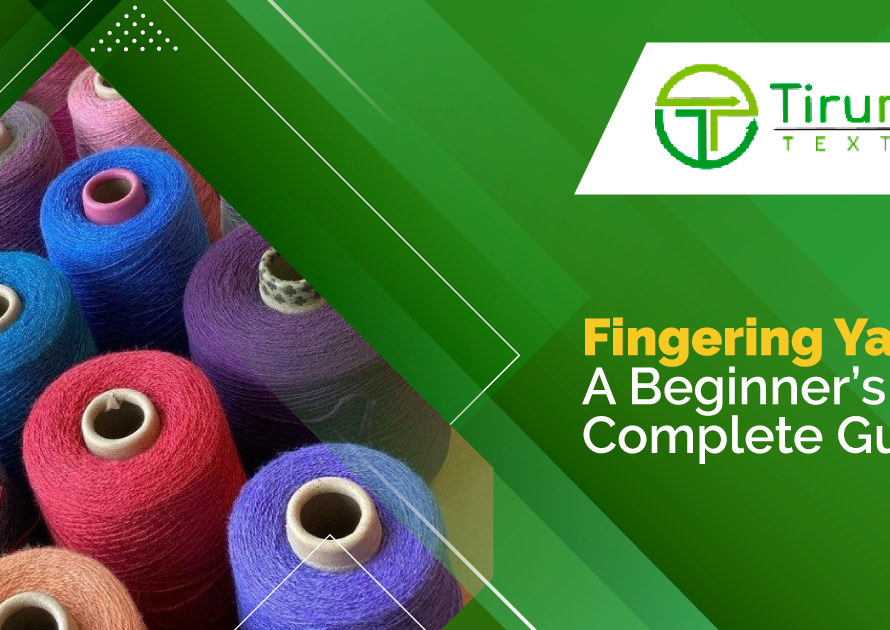
Yarn is wound onto cones or cheeses using auto-coners, with splicers fixing breaks and clearers detecting defects. Electronic yarn clearers ensure that packages for weaving or knitting are defect-free.
Also Read: https://tirumalaitextiles.com/difference-between-thread-and-yarn/
Yarn Manufacturing Variations, Quality Control, and Applications
Variations in Yarn Manufacturing
Modern mills modify the yarn-making process for synthetics or mixes. Open-end (rotor) spinning eliminates the need for roving, favouring faster, thicker yarns suitable for towels. For effective, economical output, look into Coimbatore’s open-end spinning machines. Consider open-end spinning mills in Coimbatore for efficient, cost-effective output.
Ring spinning produces fine, quality yarns, whereas compact spinning eliminates hairiness and improves fabric hand-feel. Scouring and worsted processes are used on wool or wool blends to achieve smoother results. Vortex (air-jet) spinning advances further by infusing compressed air to securely wrap fibres, resulting in low-hairy yarns suitable for knitting without significant ends-down. Siro-spinning and compact spinning improve ring techniques by reducing migration, resulting in superior yarns for high-end suiting. Worsted systems for wool or blends include scouring, carbonising (an acid treatment that removes vegetable matter), gilling (fibre alignment), and backwashing to ensure lustrous results. Melt-spinning polymers like polyester into filaments is the first step in creating synthetic yarn, which is then texturised for stretch.
These changes represent the industry’s shift towards automation, sustainability, and blended fibres to fulfil a variety of worldwide demands.
Quality Control Throughout
Each stage tracks statistics such as the number of nep, the level of garbage, and CV% (coefficient of variation). Uster Technologies ensures that yarn satisfies international standards for strength (RKM), evenness, and flaws by standardising testing.
Spectrograms reveal periodic fluctuations caused by machine flaws, whereas Classimat separates errors by type and magnitude. Online testers such as Uster Tester 6 integrate tensile, twist, and hairiness data in real time. Labs use HVI systems to confirm strength, length (UHML >28mm), and micronaire (fibre maturity, 3.8–4.5).
Water usage, energy efficiency, and waste recovery (5-10% via pneumatic systems) are all part of the sustainable assessments. Certifications such as OEKO-TEX ensure chemical safety, boosting buyer confidence in a competitive market.
Applications and Innovations
Yarn is the basis for nonwovens (spunbond, needle-punch for hygiene goods), knitting (single jersey, interlock machines), and weaving (air-jet, rapier, projectile looms). Coarser counts (10s–20s) fit denim and domestic textiles, whereas finer counts (60s+) feed premium shirts and lingerie. Technical uses include agro-textiles (crop protection nets), medical (bandages, sutures), automotive (seat coverings), and geotextiles (soil stabilisation).
Value-added segments are driven by innovations such as antimicrobial treatments and core-spun yarns (elastane core for stretch jeans). With mills in Gujarat and Tamil Nadu, India, the second-largest producer in the world, exports $8–10 billion a year. Industry 4.0 automation, including IoT sensors and AI predictive maintenance, increases productivity by 20–30%, while eco-initiatives support recycled polyester and organic cotton, lowering carbon emissions amid growing sustainability regulations.
Conclusion
This precise yarn manufacturing process demonstrates the engineering accuracy required to transform bales into fabric lifelines, which fuel a multitrillion-dollar ecosystem of invention and trade.
FAQs
- What are the steps in making yarn?
The primary steps include fibre opening and cleaning, carding, drawing, roving, and spinning, followed by winding.
- What is the process of fiber to yarn?
Fiber is washed, carded and drawn to align it, slightly twisted into roving, and then spun into yarn.
- What are the four steps in the production of yarn?
The four basic steps are carding, drawing, roving, and spinning.
- What is the drawing process in yarn manufacturing?
Drawing is the process of combining and stretching several slivers to create uniform, parallel fibres.
- What is type 3 yarn?
Type 3 yarns are complicated or fancy yarns created by combining two or more yarns to achieve decorative effects.
- What are the different methods of yarn processing?
Compact spinning, air-jet spinning, ring spinning, and rotor (open-end) spinning are common techniques.